
identify genuine raw Indian hair
The quest for authentic raw Indian hair in a market flooded with imposters is a significant challenge for buyers. Discerning genuine raw Indian hair from chemically processed or synthetic alternatives requires a keen eye and a thorough understanding of its unique characteristics. The allure of untouched, pure hair is undeniable, but without proper knowledge, one can easily fall prey to misleading descriptions and inferior products.
One of the most immediate indicators of genuine raw Indian hair is its appearance and feel. Authentic raw hair will typically have a natural luster, not an overly shiny or glossy finish, which often suggests silicone coatings used to mask lower quality hair. When you run your fingers through it, it should feel soft and smooth, with a subtle natural coarseness that is characteristic of unprocessed hair. The ends may also appear slightly varied, as they are not uniformly cut like machine-processed hair.
Next, examine the cuticle alignment. This is arguably the most crucial test. raw Indian hair, being single-donor hair, will have all its cuticles running in the same direction. To test this, take a small strand of hair and run your fingers down it. It should feel smooth. Then, try running your fingers upwards, against the grain. If it feels rough and catches, it’s a strong sign of intact, aligned cuticles, indicating genuine raw hair. Processed hair often has stripped or misaligned cuticles, leading to tangling and matting.
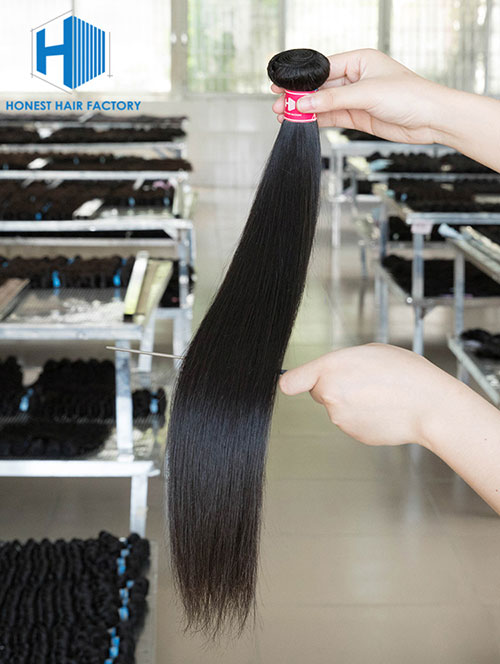
How to identify genuine raw Indian hair from processed ones?
Another significant tell-tale sign is the smell. Genuine raw Indian hair will have a subtle, natural scent, perhaps even a faint earthy smell from its collection. Conversely, processed hair often carries a chemical odor from dyes, perms, or other treatments. A strong, artificial fragrance is a definite red flag, indicating that the hair has been heavily altered. Similarly, the presence of visible nits or lice, while unpleasant, can sometimes be a perverse sign of truly raw, unprocessed hair directly from a donor, though reputable suppliers will clean and sanitize their products.
When evaluating larger quantities, particularly wholesale Indian curly hair, consistency in curl pattern is vital. While raw Indian hair offers a range of natural textures, from straight to wavy to loosely curled, each bundle from a single donor will exhibit a consistent curl pattern throughout. If you notice drastically different curl patterns within the same bundle, it’s highly likely that the hair has been mixed with different donor hair or subjected to artificial perming processes. True wholesale Indian curly hair maintains its natural elasticity and bounce without feeling stiff or overly uniform.
Finally, consider the shedding and tangling. While all hair sheds to some degree, genuine raw Indian hair will shed minimally and be largely tangle-free due to its intact cuticles. If hair tangles excessively or sheds heavily even before styling, it’s a clear indication that it’s either processed, non-remy (cuticles not aligned), or a blend of different hair types. Investing time in these simple identification techniques will ensure you acquire truly authentic raw Indian hair, guaranteeing superior quality and longevity for your products.
